AI-agreement at Solvay
EUWIN Bulletin Spring 2026
Discussion on AI
Artificial intelligence is nowadays the major topic of discussion in working life. Will it lead to job losses, or will new jobs be created? Will AI help workers perform their work better, more easily, and with greater autonomy, or will only routine tasks remain? Will the share of monotonous, repetitive jobs decrease, or will new ones be created? Will there be fewer dangerous jobs, or will new dangerous tasks emerge? Will algorithmic management of workers lead to greater efficiency, or will it also bring permanent surveillance and privacy problems? And so on.
While not much research has been conducted yet, the research that does exist shows that all these possible outcomes occur in practice. The outcomes depend not only on the technology, but primarily on the organisational choices made. The next question is: how are these decisions made? Who is involved? And what considerations play a role? Of course, management makes the final decision, supported by experts from both within and outside the organisation. Hopefully, they observe European legislation on AI, platforms, and occupational health. Wise managers also involve their employees, through the works council (representative participation) and in shop-floor consultancy (direct participation), and sometimes the unions when discussing employment and/or the employment relationship (contracts). After all, employees are the most important experts and usually have many ideas about how technology and organisation can best be shaped. In some companies, management and employee representatives have made agreements on how they will discuss AI and what criteria will be used. A good and recent example is Solvay, where, at the initiative of the European Works Council (EWC, since 1995) and the Solvay Global Forum (SGF, employees worldwide, since 2017), an “Addendum on Artificial Intelligence” was signed on December 15, 2025, as a follow-up to the “Global Framework Agreement on Digital Transformation” (originally signed on April 6, 2020). The 2020 global agreement contains issues such as communication and involvement, technology assessment, employment and repositioning, monitoring and surveillance functions, privacy, work content, occupational safety and health.
Solvay approach regarding autonomous and AI systems
Solvay’s approach to issues posed by AI systems will be built on four pillars.
- Initial and ongoing inventorisation of AI and autonomous systems within Solvay.
- Risk assessment to categorise AI solutions by risk level, considering the EU AI Act. No systems that represent an ‘unacceptable risk” shall be used within Solvay (systems posing a clear threat to fundamental rights such as, without limitation: social scoring systems, emotion recognition systems, systems capable of manipulation or exploitation of vulnerabilities).
- Governance – setting up procedures and roles to manage compliance and risks associates with AI tools. Among other things compliance with legislation, human oversight (systems that support or stimulate human decision making should at all times remain auditable and subject to human supervision) and responsible use of AI (autonomous systems should not produce discriminatory, biased or harmful outcomes and should in general align with Solvay’s values and ethical principles).
- Upskilling – providing proper training both on the use of these tools and on the procedures, rules and regulations surrounding them.
Updates of digital and AI-projects will be discussed in quarterly meetings, reflecting the following points.
- Development of company policy and governance.
- Objectives of implementation of AI-systems
- Efficiency gains
- Impact on workforce: the potential for AI-systems to support or substitute worker functions.
- Software integration.
- Skills and training: the identification of skill gaps and the provision of necessary training and upskilling opportunities for employees.
- Quality of work: prevention of de-skilling and monotonous, repetitive work.
- Data quality and robustness.
- Diversity, equity, and inclusion (DE&I): assessment of potential impacts on Solvay’s DE&I principles.
Full texts of both agreements can be found on the website of the EWC and SGF. Achievements: Empowering Employees Globally

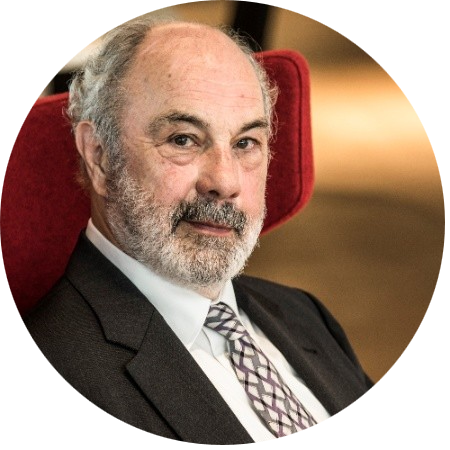
Photo: Left: Marco Roumen, secretary European Works Council & coordinator Solvay Global Forum. Right: Mark van Bijsterveld, Chief People Officer & Member of the Executive Leadership Team at Solvay.
Well-developed social dialogue
In an interview I had with him, Marco Roumen said he was very satisfied with both agreements. It took some time because we wanted to collect ideas and experiences from all levels of the organisation for this new topic. Social dialogue is well-developed at Solvay and is fully and actively supported by the top management. The Executive Leadership Team is also consistent and persevering, as evidenced by the sustainability policy and the active and comprehensive DE&I policy. Without trust between management and employee representatives, Marco believes a paper agreement is meaningless. Of course, there are differences between countries due to different political systems and labour relations. This is evident in the implementation of the 2020 agreement during the periodic evaluations that are made on, for example, job autonomy, workload and training needs.
The EWC consulted Fredy Peltzer (policy officer at the Dutch trade union federation FNV and member of the European Economic and Social Committee) and me on possible texts for both agreements. We were able to contribute our knowledge of discussions within the international trade union movement and research in this area.
This agreement won’t be the last. New topics constantly arise that require further elaboration. For example, the social dialogue already discussed the fact that the use of AI involves high energy consumption, which conflicts with sustainability policy. However, this effect is not yet readily measurable. As soon as it becomes possible, policy on this topic will be developed and agreed upon. The social dialogue is also, of course, focused on the changing relationships in the world and what they mean for Solvay. Many questions were raised at the beginning of this article. To provide sound answers, social dialogue is essential, and an agreement with principles and criteria is even better. Solvay is a stimulating example of this.
Share This Story!

European Workplace Innovation Network (EUWIN)
EUWIN was established by the European Commission in 2013 and is now entirely supported by contributions from an international network of partners co-ordinated by HIVA (University of Leuven). EUWIN also functions as a network partner to BEYOND4.0 and BRIDGES5.0 projects.
Contact: Workplace Innovation Europe CLG (contact@workplaceinnovation.eu).